

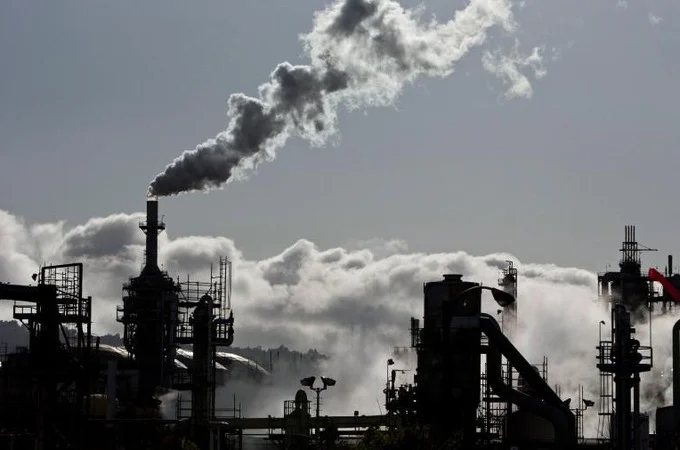
Vietnam is entering a significant phase in its efforts to manage greenhouse gas emissions. After years of preparing legal frameworks and building a national emissions inventory system, the government has begun piloting the allocation of greenhouse gas emission allowances to major industrial facilities. This policy is not only an environmental management measure but also a foundational step toward establishing a domestic carbon market.
The decision to allocate emission quotas to coal-fired power plants, steel manufacturers, and cement producers represents one of the first concrete actions to implement Vietnam’s climate commitments. At the same time, it opens a critical testing phase before the country’s carbon market is expected to operate more fully in the coming years.
A new decision targeting major industrial emitters
Vietnam’s Ministry of Agriculture and Environment has recently issued Decision No. 699/QĐ-BNNMT, launching a pilot program to allocate greenhouse gas emission allowances for the years 2025 and 2026. The decision follows Decision No. 263/QĐ-TTg, signed by Deputy Prime Minister Trần Hồng Hà on February 9, 2026, which approved the national pilot emission cap for the same period.
Under the approved framework, the total greenhouse gas emission allowances allocated during the pilot phase amount to more than 243 million tons of CO₂ equivalent for 2025 and approximately 268 million tons for 2026. These allowances are distributed among 110 industrial facilities operating in three sectors with particularly high emissions: thermal power generation, cement production, and steel manufacturing.
Although the number of companies involved in the pilot program is relatively small compared with the entire industrial sector, their contribution to national emissions is substantial. According to the Department of Climate Change, the combined emissions of these 110 facilities account for nearly 40 percent of Vietnam’s total greenhouse gas emissions.
The group includes many of the country’s largest industrial complexes. In the thermal power sector, plants such as Quảng Ninh Thermal Power, Mông Dương, and Vĩnh Tân are among those with the highest emission volumes. In the steel industry, large integrated production complexes such as Formosa Hà Tĩnh and Hòa Phát Dung Quất are also included in the allocation list.
Selecting heavy industry as the starting point for the pilot reflects the structure of Vietnam’s emissions profile. Coal-fired electricity generation, steelmaking, and cement production all require energy-intensive processes that rely heavily on fossil fuels. As a result, these industries account for a large share of the country’s carbon emissions.
New compliance responsibilities for emitting enterprises
Under the new framework, facilities receiving emission allowances must surrender emission units corresponding to their verified greenhouse gas output. The requirement is defined in Decree No. 06/2022/NĐ-CP, which regulates greenhouse gas mitigation and ozone layer protection. The decree was later revised and supplemented by Decree No. 119/2025/NĐ-CP in order to refine the legal mechanisms governing emission allowances.
In practical terms, the system functions as a quota-based emission control mechanism. Each participating facility receives a fixed emission allowance within a defined period. If a company emits less than its allocated quota, it may retain the unused portion and potentially trade it once the domestic carbon market is operational. If emissions exceed the assigned limit, the enterprise must either reduce its emissions or obtain additional carbon credits.
Climate policy analysts note that such mechanisms can create strong economic incentives for companies to improve energy efficiency and adopt cleaner technologies. Instead of relying solely on administrative restrictions, emission caps introduce a market-oriented approach to reducing greenhouse gas emissions.
The policy path leading to emission allowance allocation
The pilot allocation of emission allowances is the outcome of a policy process that has developed over several years.
One of the most significant milestones was the adoption of the Environmental Protection Law in 2020. For the first time, Vietnam’s legal system formally introduced the concept of a domestic carbon market and established the legal basis for trading emission allowances and carbon credits.
Following the passage of the law, the government issued Decree No. 06/2022/NĐ-CP to clarify the operational framework for greenhouse gas inventories, emission reduction responsibilities, and the development roadmap for Vietnam’s carbon market.
Another critical step was the establishment of a national greenhouse gas inventory system. In 2022, the Prime Minister issued a decision identifying more than two thousand facilities required to conduct regular greenhouse gas inventories. These facilities operate across multiple sectors including energy, industry, transportation, and waste management.
Data collected through this inventory system over the past several years has provided the foundation for calculating emission baselines and designing the allocation methodology for emission quotas. The selection of 110 large emitters for the pilot phase represents the next stage in the gradual development of Vietnam’s national emission management system.
A domestic carbon market gradually taking shape
According to the government’s roadmap, Vietnam will develop its carbon market in several stages. The current period focuses on establishing legal frameworks, strengthening the national greenhouse gas inventory, and testing allocation mechanisms for emission allowances.
The pilot allocation to large industrial facilities is an essential preparatory step before the carbon market becomes fully operational. Once the market is established, companies will be able to buy and sell emission allowances or carbon credits, effectively creating a price signal for carbon emissions within the economy.
Internationally, similar systems have already been implemented in many regions. The European Union operates the world’s largest emissions trading system, covering power generation and heavy industry across its member states. China has also launched a national carbon market initially targeting the power sector, with plans to expand it to other industries.
For Vietnam, building a carbon market serves not only domestic environmental objectives but also broader economic interests. Many major economies are introducing carbon pricing mechanisms that affect imported goods. For instance, the European Union is implementing the Carbon Border Adjustment Mechanism, which will apply carbon-related costs to certain imported products such as steel and cement.
A structural shift toward a low-carbon economy
The pilot allocation of emission allowances to major industrial enterprises indicates that Vietnam is entering a new phase in its climate policy. Rather than relying exclusively on regulatory controls, the country is gradually adopting market-based instruments to manage emissions.
The pilot phase over the next two years will play a critical role in assessing the effectiveness of the system. Authorities will closely monitor compliance among participating enterprises while continuing to refine methodologies for emissions measurement, reporting, and verification.
If the system proves reliable and transparent, the scope of emission trading could expand to additional sectors of the economy in the coming years. At that point, Vietnam’s domestic carbon market may become a central tool for achieving the country’s long-term commitment to reach net-zero emissions by 2050 while supporting a broader transition toward sustainable economic growth.
