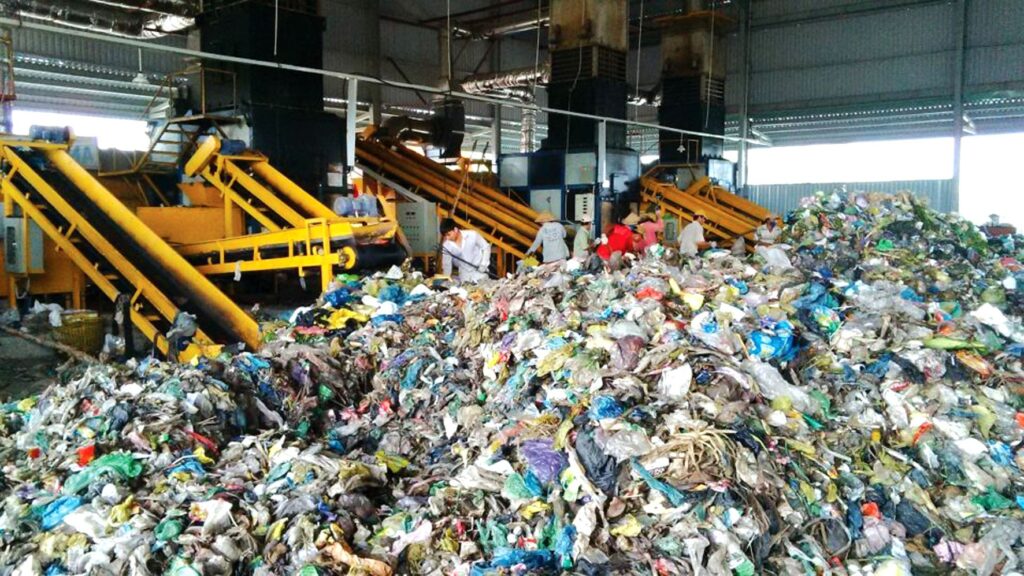
Every day, Vietnam generates nearly 70,000 tons of municipal solid waste. This figure reflects not only rapid urbanization and rising consumption but also places significant pressure on the country’s waste management system. Currently, most of this waste is still treated through landfilling, a method that not only wastes valuable resources but also poses long-term risks to soil, water, and the climate.
In this context, the approach to waste is gradually changing. Instead of viewing waste as something to be discarded, many experts argue that it should be seen as a valuable resource if managed effectively.
Waste Management System: The Bottleneck Lies at the Final Stage
Vietnam currently has around 1,700 solid waste treatment facilities. However, about 60 to 65 percent of waste is still disposed of in landfills. This indicates that treatment capacity has not kept pace with the rapid increase in waste generation, especially in major urban areas.
Mr. Ngo Huynh Thien, CEO of ARC V, noted that Vietnam’s waste collection system is actually quite efficient. In many cities, collection rates are relatively high compared to regional standards. However, the core issue lies in the treatment stage, where the resource value of waste has not been fully utilized.
According to him, if waste is considered a secondary resource, the current system is still operating under a “disposal mindset” rather than a “resource recovery mindset.”
Key Barriers: Not Awareness, but Mechanisms
Mr. Nano Morante from PlasticPeople pointed out that public awareness of environmental protection in Vietnam has improved significantly in recent years. However, the biggest obstacle lies in the lack of effective enforcement tools.
Waste segregation at source has not been widely or consistently implemented. Financial mechanisms supporting recycling remain limited. Regulatory frameworks still contain overlaps, making real-world application difficult.
From another perspective, Mr. Nguyen Trong Minh, founder of GRAC, emphasized that international corporations such as Heineken and PepsiCo have contributed to raising environmental standards in Vietnam. Nevertheless, achieving systemic change will require synchronized improvements in both infrastructure and policy.
Technology: From Waste-to-Energy to Biological Solutions
Waste-to-energy technology is considered a promising solution, but high initial investment costs make many localities cautious about implementation.
At the same time, biological technologies are opening up more flexible approaches. A notable example is the use of black soldier fly larvae to process organic waste. This method significantly reduces waste volume while generating valuable by-products such as animal feed and organic fertilizer.
With lower costs and scalable deployment, this model is seen as well suited to Vietnam’s conditions.
Lessons from the World: When Waste Becomes a Resource
Many countries have demonstrated that waste can become a valuable resource when managed effectively.
In Sweden, landfill use has been almost completely eliminated. Most waste is recycled or converted into energy, and the country even imports waste to supply its processing plants.
In Japan, waste sorting is carried out with strict discipline, significantly improving recycling efficiency. The government also enforces strong regulations on extended producer responsibility.
Meanwhile, Germany is one of the world leaders in recycling rates, thanks to a combination of clear policies, advanced infrastructure, and active public participation.
Expert Perspectives: The Need for a Long-Term Strategy
According to reports from the World Bank and the Ellen MacArthur Foundation, transitioning to a circular economy requires a long-term strategy and strong coordination among stakeholders.
This process demands significant investment in infrastructure and technology. While profits may not be immediate, the long-term sustainable value is substantial. Policy plays a crucial role in guiding the market and encouraging business participation.
In addition, green finance mechanisms and carbon credit markets are expected to become important drivers in the coming years.
The Way Forward for Vietnam
To truly turn waste into resources, Vietnam needs a more comprehensive approach. This involves not only technology but also institutional reform, market development, and changes in consumer behavior.
Simplifying administrative procedures, strengthening international cooperation, and enabling innovative business models will be critical in the next phase.
In the long term, waste can become a valuable urban resource if managed effectively. However, achieving this will require faster, more decisive actions and coordinated efforts across the entire ecosystem.
