

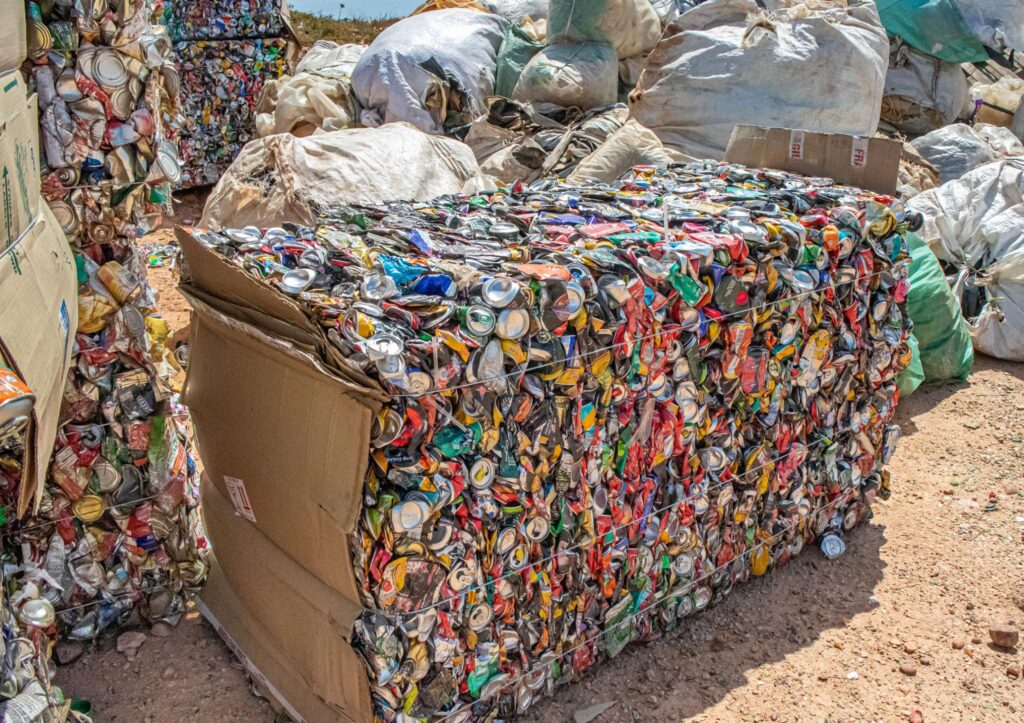
At the S&P Global Energy Aluminum Symposium 2026, a topic that might once have seemed highly technical became the center of a strategic debate that could reshape the North American aluminum supply chain for years to come. The focus was aluminum scrap, the impact of Section 232 tariffs, and the possibility that the United States could move to restrict exports of high-grade aluminum scrap.
The session titled “Scrap Signals – Trends in Secondary Aluminum Markets” brought together key players from across the value chain, including scrap brokers, recyclers and flat-rolled aluminum producers. Their discussion highlighted a clear reality: aluminum scrap is no longer just a secondary raw material. It is becoming a strategic asset at a time of high energy costs, tightening emissions standards and rising trade barriers.
Section 232 Tariffs and Their Ripple Effects Across the Market
When the U.S. government imposed a 25 percent tariff on primary aluminum imports under Section 232, later raising it to 50 percent, the impact did not stop with primary metal. According to Chad Kripke of Kripke Enterprises, the tariffs “brought everything up,” including prices for certain scrap grades, credit risk, claims costs and the widening of price spreads.
Commodity economists say this is a textbook case of price transmission across the metals value chain. As primary aluminum prices surged, industrial consumers turned to recycled aluminum as a lower-cost and lower-energy alternative. Demand rose quickly, while supplies of high-quality scrap could not expand at the same pace, pushing scrap prices higher.
A particularly important factor has been the Midwest Premium, the regional delivery premium for aluminum in the United States. When it surged above one dollar per pound, it distorted global price structures. The wide spread was enough to draw scrap from around the world into the U.S., creating unusual trade flows.
Trade specialists note that a tariff policy originally designed to protect domestic production has, paradoxically, made the U.S. more dependent on foreign scrap in certain segments by reshuffling global flows.
Scrap Contracts Shift From Long Term to Flexible
Daniel Berman of Alter Trading explained that in the past, long-term scrap supply contracts provided stability for both sides. Consumers secured monthly volumes, and suppliers did not have to renegotiate constantly.
But as the spread between scrap prices and exchange-traded aluminum prices widened and became more volatile, year-long contracts started to look risky. Many companies have shifted to quarterly agreements, or even shorter terms, to avoid being locked into unfavorable pricing.
Industrial economists describe this as a move from a stability-focused model to an adaptive one. In highly volatile environments, flexibility becomes more valuable. Companies are willing to trade certainty for the ability to respond quickly to market changes.
At Novelis, one of the largest consumers of wrought aluminum scrap, Brandon Bice said the slower 2026 contracting season brought an unexpected benefit. With more time for negotiations, both sides gained a better understanding of each other’s concerns and developed more creative deal structures. He described this as a “positive paradigm shift” that could strengthen long-term relationships between recyclers and producers rather than focusing solely on short-term price movements.
Scrap Pricing Drivers: No Longer One Unified Market
One key takeaway from the session was that the aluminum scrap market does not move as a single block. Different scrap categories are driven by different forces.
High-end segregated alloys used in applications requiring precise chemistry have tended to track the Midwest Premium fairly closely. Meanwhile, some postconsumer scrap grades have lagged, weighed down by higher sorting and processing costs relative to their metal value.
Another important development has been the rise of toll processing that upgrades certain scrap streams into remelt secondary ingot, raising their end-use value. These arbitrage opportunities are reshaping material flows between market segments.
Supply chain analysts believe this segmentation will deepen as traceability requirements, recycled content targets and carbon intensity standards become formal purchasing criteria for automakers and packaging producers.
The U.S. Is Importing More Scrap, Yet Still Exporting Significant Volumes
An interesting paradox raised during the discussion is that while the U.S. is attracting large volumes of scrap imports due to high prices, it also continues to export substantial amounts of valuable scrap. This reflects the deeply globalized nature of the scrap market, where material flows to wherever the best price is offered.
However, this very dynamic has prompted the Aluminum Association to advocate for restrictions on exports of high-grade aluminum scrap. Their argument centers on the need to secure sufficient feedstock for new domestic facilities, particularly those serving electric vehicle and sustainable packaging markets.
The Export Restriction Debate: Free Markets Versus Industrial Policy
For many recycling companies, the idea of export restrictions runs counter to free-market principles. Berman argued that if domestic consumers want to keep material at home, they should pay higher prices rather than relying on trade barriers.
From an economic perspective, this reflects the tension between global allocation efficiency and national industrial policy goals. Free trade maximizes short-term economic value, but it can leave a country short of strategic inputs for priority industries.
Bice offered a different view. He said the world is changing and that regions such as Europe and China are already considering or implementing scrap export restrictions to secure feedstock for low-carbon industrial strategies. Without a clear approach, the U.S. risks falling behind in the race to build a circular aluminum supply chain.
Not All Scrap Should Be Treated the Same
A critical point raised was that a one-size-fits-all policy would be misguided. Used beverage cans, for example, are an ideal feedstock for closed-loop recycling and save up to 95 percent of the energy required for primary aluminum production. The U.S. still has relatively low collection rates for this material despite strong domestic demand. Restricting exports in this segment could support the industry over the long term without causing immediate major disruption.
By contrast, lower-grade mixed scrap such as zorba or twitch often faces oversupply in the domestic market. Restricting exports could drive prices down sharply, eroding recycler margins and potentially leading to less collection. Environmental experts warn that this could increase landfill volumes, running counter to circular economy goals.
Systemic Risks if the Market Is Distorted
Kripke expressed concern that the U.S. flat-rolled aluminum market is not deep enough to absorb major shocks if exports are suddenly restricted. If just one major plant experiences an outage, scrap demand could fall sharply, sending prices plunging and creating a chain reaction for recyclers.
Economists refer to this as concentration risk. When a market depends on a small number of large buyers, disruptions can have amplified effects. In this context, international trade acts as a safety valve, absorbing excess supply when domestic demand falters.
Moreover, if domestic scrap prices fall too far due to export limits, the U.S. could lose imports from Canada and Mexico as the market becomes less attractive. The end result could be a decline in total recycled aluminum volumes rather than an increase.
The Policy Challenge: The Whole Supply Chain Needs a Voice
One of the few areas of consensus was that aluminum scrap policy is too complex for hasty decisions. It touches on trade, energy, climate, jobs and long-term industrial capacity.
Bice emphasized that if the industry does not collaborate on a balanced policy framework that reflects the realities faced by both producers and recyclers, governments may step in with measures that fail to account for market dynamics. That raises the risk of unintended consequences.
Industrial policy experts suggest a tiered approach. First, scrap categories should be clearly defined based on strategic value and supply-demand conditions. Then, different tools can be considered, such as incentives for domestic collection, investment in sorting infrastructure or flexible export licensing rather than blanket bans.
Aluminum Scrap: From Waste to Strategic Pillar
The clearest message from the symposium is that aluminum scrap has entered a new era. It is no longer a byproduct of the economy but a core resource for decarbonizing the metals sector.
With primary aluminum production consuming vast amounts of electricity and facing mounting emissions pressure, recycled aluminum offers a competitive advantage in both cost and environmental performance. Countries that manage scrap flows effectively will hold a strategic edge in the emerging green economy.
Yet, as speakers repeatedly stressed, control does not have to mean closure. The real challenge is designing policies sophisticated enough to protect domestic industrial interests while preserving the economic incentives that keep recycling systems functioning and maintaining the global material flows that allow markets to operate efficiently.
In that sense, the debate at the S&P Global Energy Aluminum Symposium 2026 was about far more than scrap. It reflected a broader question of our time: how to balance free markets with supply chain security in an era defined by energy transition and intensifying geopolitical competition.
Source: S&P Global
