1. Overview of the 2026 Plastics Market Context
As we move through 2026, the global and Vietnamese plastics industries are no longer operating under the traditional linear “Take-Make-Dispose” model. The strict enforcement of the Global Plastics Treaty and the Carbon Border Adjustment Mechanism (CBAM) has transformed plastic from a cheap commodity into a product heavily impacted by “green taxes.”
1.1. Virgin Plastics Price Cycle
The price of virgin plastic maintains a close relationship with Brent and WTI crude oil indices. However, in 2026, this relationship is increasingly distorted by the energy costs of operating petrochemical complexes.
- Upstream Costs: Ethylene and Propylene prices have increased by 15% year-on-year due to geopolitical instabilities in the Middle East affecting oil supplies.
- Domestic Supply: In Vietnam, major petrochemical complexes like Long Son and Nghi Son are operating at steady capacity. While this reduces import pressure, domestic prices still track international exchange rates to ensure global competitiveness and profitability.
1.2. The Rise of the Scrap Plastics Market
Plastic scrap is no longer viewed as “waste.” In Vietnam, with the full implementation of Extended Producer Responsibility (EPR) since 2024, scrap has become a strategic resource.
- Demand Outstripping Supply: Multinational corporations (FDI) such as Coca-Cola, Unilever, and Samsung are aggressively sourcing recycled plastics to meet their targets of 25-50% recycled content in packaging. This has driven the price of “clean” sorted scrap to record highs.
2. Detailed Analysis of Popular Plastic Resins
2.1. Packaging Plastics (PE, PP, PET)
This group experiences the highest volatility due to massive trade volumes.
- Virgin PET: Prices fluctuate between $1,100 – $1,300/ton. Meanwhile, rPET (Food-grade recycled PET) is currently trading at a 10-15% premium over virgin PET. This represents a fascinating paradox: consumers and brands are willing to pay more for “old” plastic to secure green certifications.
- Virgin PP: Prices remain relatively stable due to abundant supply from new plants in China and Southeast Asia. However, the profit margins for PP scrap are narrowing as the electricity costs for washing and pelletizing recycled resins continue to climb.
2.2. Engineering Plastics (ABS, PC, PA)
This segment serves the Electric Vehicle (EV) and electronics industries.
- Virgin ABS: In 2026, ABS prices reached the $2,000/ton threshold. Scrap from Waste Electrical and Electronic Equipment (WEEE) has become a rare commodity. Extracting high-purity ABS from electronic waste requires advanced technology, keeping these scrap prices high and less sensitive to crude oil fluctuations.
3. Comparative Analysis: Virgin vs. Recycled Plastics
To understand the price gap, we must examine the cost structure:
P_{total} = C_{material} + C_{energy} + C_{logistics} + Tax_{carbon}
3.1. Cost Structure Analysis
- Virgin Plastic: Approximately 70% dependent on crude oil and gas prices. When oil exceeds $90/barrel, virgin resin loses its competitive edge against basic recycled materials.
- Recycled Plastic: Raw scrap input accounts for only 30-40% of the cost, while processing (sorting, cleaning, deodorizing) accounts for up to 40%. In 2026, as Chemical Recycling technology scales up, the quality of recycled resin is reaching parity with virgin resin, subsequently driving up its market value.
3.2. Economic Comparison Table (Unit: VND/kg – 2026 Estimates)
| Plastic Type | Virgin Price | Scrap Price | Recycled Pellet Price |
| PP | 36,000 | 14,000 | 26,000 |
| LDPE | 34,000 | 12,000 | 24,000 |
| PET | 24,000 | 15,000 | 28,000 (Food-grade rPET) |
| ABS | 48,000 | 25,000 | 38,000 |
4. Macro Factors Influencing 2026 Prices
4.1. EPR Policies and Carbon Taxes
In Vietnam, plastic packaging producers must pay recycling fees into the Environmental Protection Fund if they do not organize their own recycling. This creates a new “price floor” for scrap. Businesses now calculate scrap value as:
Value_{Scrap} = Value_{Virgin} – Fee_{EPR} + Value_{Green Brand}
4.2. Chemical Recycling Technology
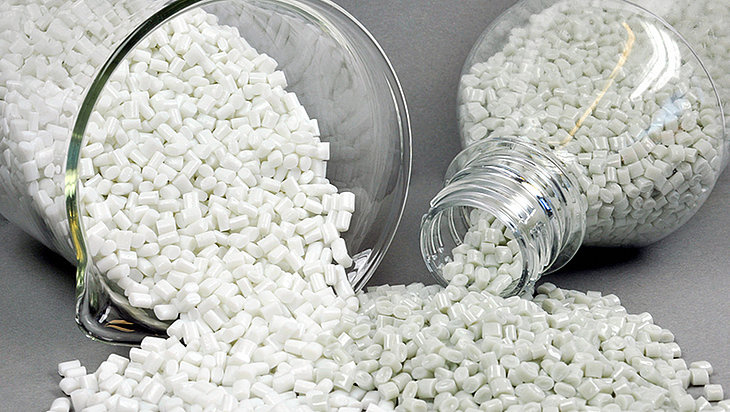
Unlike mechanical recycling (melting), chemical recycling breaks polymer chains down into their original monomers. This allows contaminated, mixed plastic waste—previously unrecyclable—to produce 100% virgin-quality resin. Investments in these facilities during 2025-2026 have begun to fundamentally shift the valuation of mixed plastic waste.
5. Challenges and Opportunities for Vietnamese Enterprises
5.1. Challenges
- Import Dependency: Vietnam still imports large quantities of both virgin resins and high-quality clean scrap. USD/VND exchange rate fluctuations place immense pressure on small and medium-sized enterprises (SMEs).
- Fragmented Collection Systems: Despite high scrap prices, collection remains largely informal (via street collectors). This leads to inconsistent scrap quality, increasing processing costs for formal recycling plants.
5.2. Opportunities
- Green Plastic Exports: EU and US markets prioritize products with high recycled content. Companies that secure stable scrap supplies will have significant leverage in negotiating export prices.
6. Conclusion and Forecast
Plastics pricing in 2026 is no longer a simple linear graph. We are witnessing a convergence between the prices of virgin resin and high-quality recycled resin.
Year-end 2026 Forecast:
- Virgin prices will plateau if geopolitical tensions stabilize, fluctuating within a 5-8% range.
- Scrap prices will rise moderately (approx. 10%) due to demand from newly commissioned recycling plants.
- Companies mastering Compounding (blending virgin and recycled resins) will have the best ability to optimize production costs.
Note: Figures are based on market trend reports and economic forecast models as of early 2026.
