
Legislative Context and New Vision (The 2020 Law on Environmental Protection)
The implementation of policies and laws on environmental protection (EP) in Vietnam has always been a major challenge, given the rapid pace of industrialization, urbanization, and the growing demand for economic development. The Law on Environmental Protection 2020, effective from January 1, 2022, was expected to create a turning point in management philosophy, shifting from the “end-of-pipe” approach to a holistic, early and remote prevention and control approach, viewing the environment as a critical component in all development decisions.
On October 28, 2025, the 10th Session of the 15th National Assembly witnessed an important discussion on the Supervisory Delegation’s Report, which focused on evaluating the results of implementing EP policies and laws since the 2020 Law came into effect. This supreme oversight activity aimed to honestly and objectively acknowledge the achievements while also pointing out the “bottlenecks” that need to be removed to realize the goal of sustainable development, ensuring that economic growth is not achieved at the expense of the environment. The Secretary-General of the National Assembly and Chairman of the National Assembly Office, Le Quang Manh, presented the Report, outlining a comprehensive picture with both encouraging highlights and urgent areas needing immediate attention.
This article will delve into an analysis of the three main pillars from the report: the positive initial results; the core limitations and causes; and the strategic orientation and breakthrough solutions aimed at consolidating and strengthening the national environmental protection shield.
I. POSITIVE INITIAL RESULTS AND FIRST STEPS OF TRANSITION
The introduction of the 2020 Law on Environmental Protection provided a strong “impetus” in terms of institutions and policies. In a short period since the Law took effect, the Government, the Prime Minister, ministries, sectors, and localities have issued more than 500 guiding and implementing documents. This demonstrates a strong determination to institutionalize and fully realize the Party’s and State’s policies on EP and response to climate change.
1. Institutional Completion and Strategic Planning
One of the most notable achievements is the first-time successful development of a comprehensive and synchronized National Environmental Protection Strategy and Planning. The creation of these strategies provides a long-term vision and a specific action framework for the entire political system and the business community.
In addition, the system of environmental technical standards and regulations has been reviewed and updated to align with international standards. Raising these standards not only encourages businesses to innovate technology but also acts as an effective legal barrier to prevent the import of obsolete, polluting technologies.
2. Financial Commitment and Resource Mobilization
Despite facing economic fluctuations and the impact of the pandemic, the financial commitment to EP has been strictly maintained. The supervisory report confirms that environmental budget expenditure is not lower than $1\%$ of the total state budget expenditure and has shown an increasing trend over the years. This is a positive signal, affirming the priority given by the National Assembly and the Government to EP.
Significantly, socialized resources have been strongly mobilized. The participation of the private sector in waste treatment projects, renewable energy, and circular economy models is increasing, providing momentum for the development of the environmental industry.
3. Proactive Waste Management and Environmental Quality Improvement
A noteworthy achievement in waste management is the proactive and strict control of major pollution sources, preventing large-scale environmental incidents. The collection rate for municipal solid waste has reached an impressive $97.26\%$ in urban areas and $80.5\%$ in rural areas. This is accompanied by a positive shift in processing technology: a reduced rate of landfilling, and an increased focus on recycling and energy recovery. Many models of environmentally friendly eco-cities, eco-rural areas, and eco-industrial parks have emerged, demonstrating the effective application of green criteria.
Regarding environmental quality improvement, the rate of increase in pollution and environmental degradation has been curbed. Environmental quality is gradually improving, especially soil quality, surface water quality in some key river basins, coastal seawater, and groundwater.
4. Positive Response to Climate Change
In the field of climate change response, Vietnam has seen positive changes, enhancing its adaptive capacity. The deployment of greenhouse gas inventory and the establishment of a legal corridor for the carbon market are strategic steps towards the Net Zero emission goal by $2050$. Specific adaptation solutions, particularly in the Mekong Delta, are being implemented, demonstrating the nation’s proactive stance against the extreme impacts of climate change.
II. CORE LIMITATIONS AND CHALLENGES
Despite achieving positive initial results, the Supervisory Report frankly pointed out that the organization and implementation of the 2020 Law on Environmental Protection still face serious limitations and shortcomings, directly threatening the goals of sustainable development and social welfare.
1. Serious Environmental Pollution Issues Remain Unresolved
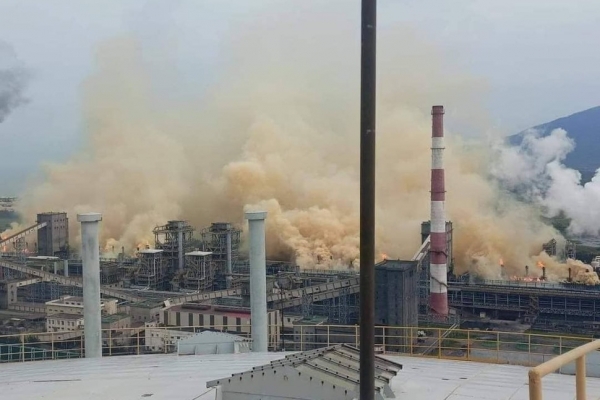
Environmental pollution remains a pressing issue that needs resolution.
- Air Pollution: Especially fine dust ($PM2.5$) in major cities like Hanoi and Ho Chi Minh City, which at many times exceeds safe thresholds, directly affecting public health. Emissions from transportation, construction, and small-scale industrial activities are still not effectively controlled.
- Water Pollution: Water pollution in key river basins such as the Cau, Nhue–Day, and Bac Hung Hai Rivers has been slow to improve. This is a consequence of industrial and domestic wastewater discharge that is either untreated or inadequately treated.
More alarmingly, according to the Resolution of the 13th Party Congress, by $2025$, $100\%$ of seriously polluting establishments must be definitively dealt with. However, as of September $2025$, the country still has $38/435$ establishments that have not completed this thorough remediation. This delay is not only a failure to meet the set goal but also a persistent burden on the environment and social welfare.
2. Weak and Obsolete Environmental Protection Infrastructure
One of the biggest limitations is that environmental protection infrastructure remains weak and outdated, unable to keep pace with the rate of urbanization and population growth:
- Urban Wastewater Treatment: Only $18\%$ of urban wastewater is collected and treated. This figure is alarmingly low, meaning most domestic wastewater is still discharged directly into the environment, polluting rivers, lakes, canals, and groundwater sources.
- Wastewater Treatment in Industrial Clusters and Craft Villages: Only $31.5\%$ of industrial clusters and $16.6\%$ of craft villages have wastewater treatment systems that meet requirements. This indicates lax control over scattered pollution sources, leading to prolonged and localized pollution.
- Solid Waste Management: Landfilling still accounts for a high percentage of waste treatment. Policies for sorting, collecting, and recycling waste are slow to be implemented and lack synchronization. In particular, the infrastructure for recycling specialized waste (electronics, batteries, solar panels) is limited, posing a risk of hazardous waste in the future.
3. Ineffective Environmental Economic Policies
Several important policy objectives, particularly economic instruments, have not yielded the expected effectiveness:
- EP Taxes and Fees: Environmental protection taxes and fees have not created a strong enough leverage to change consumption and production behaviors towards sustainability. The tax and fee levels do not accurately reflect environmental costs and lack the necessary deterrent effect to compel polluters to change.
- Vietnam Environment Protection Fund: The Fund has not operated efficiently and has not truly become a key financial tool to promote and support green environmental projects, especially those with high risk but great potential for new technologies.
4. Management Shortcomings and Social Distress
Environmental consulting services remain weak in expertise and low in quality, leading to Environmental Impact Assessment (EIA) reports that do not accurately reflect reality.
The situation of complaints and violations of environmental law remains complex. Many incidents involving illegal discharge, waste treatment, gas emissions, and cemetery projects have caused public outrage, severely affecting the lives of residents and social order. Notably, local authorities often only request mitigation measures without implementing fundamental, thorough solutions, allowing pollution to persist.
III. ROOT CAUSES OF THE LIMITATIONS
The Supervisory Report meticulously analyzed the causes leading to these limitations, including both objective and subjective factors.
1. Objective Causes
Objective causes mainly relate to the global and domestic context:
- Economic Fluctuations and Pandemic: The impact of the Covid-19 pandemic and global economic volatility has slowed down the schedule for implementing public investment and socialized EP projects.
- Urbanization and Climate Change: The rapid pace of urbanization puts immense pressure on environmental infrastructure. Extreme climate change causes unpredictable weather patterns, increasing the risk of environmental incidents and eroding EP achievements.
- Technological Constraints: Difficulties in developing the carbon market and the lack of a global supply of advanced environmental technology are also major barriers.
2. Subjective Causes (Core Issues)
Subjective causes stem from the internal system and management mindset, which require strong remediation:
- Prioritizing Economy Over Environment: The awareness and responsibility for EP among some levels, sectors, and businesses remain limited. The mindset of prioritizing economic growth over EP still exists, leading to negligence in appraisal, supervision, and handling of violations.
- Lack of Institutional Synchronization and Slow Implementation: Although the law has been revised, there is still a lack of synchronization between the EP Law and other specialized laws (tax, fees, investment). The promulgation and implementation of policies (such as the carbon market and energy transition) are lagging behind the set schedule.
- Resources and Obsolete Technology: Financial resources do not meet actual needs. Production technology remains backward, consuming excessive energy and resources. Crucially, the principle of “the polluter pays” has not been strictly enforced, reducing the legal deterrent effect.
- Management Capacity and Penalties: Allocation of tasks and coordination among agencies are not tight, and management capacity and infrastructure are weak. The environmental official workforce lacks professionalism. Inspection and violation handling are not strong enough, penalties are light, and insufficient to deter large-scale, repeated polluting behaviors.
- Weak Community Participation: The participation of the community and social organizations in EP is weak and not widespread, reducing the effectiveness of social oversight over projects and production facilities with high pollution risks.
IV. STRATEGIC ORIENTATION AND BREAKTHROUGH SOLUTIONS
Based on the analysis of the limitations, the Supervisory Report proposed breakthrough tasks and solutions, divided into two groups: urgent (by the end of $2026$) and medium-to-long term (by $2030$).
1. Urgent Tasks and Solutions (By the end of 2026)
The urgent goal is to innovate the mindset and complete the institutions to unlock resources and promote socio-economic development.
- Amendments and Supplements to the 2020 EP Law: This is a key task. The National Assembly proposed reviewing, evaluating, and proposing amendments and supplements to the Law on Environmental Protection 2020, to be submitted to the National Assembly for consideration and approval at the beginning of the 16th National Assembly term.
- Immediate Amendments to Certain Articles: Immediately consider amending several articles of the Law at the 10th Session to resolve immediate obstacles, contribute to unlocking resources, and promote the two-tier local government model. It is necessary to amend regulations on the roadmap and application time for policies related to solid waste management to suit practical requirements.
- Review Related Legislation: Review, amend, and supplement related legal provisions such as environmental protection taxes, fees, state budget, and investment to create synchronization and enhance the effectiveness of economic instruments.
2. Medium and Long-Term Tasks and Solutions (By 2030)
The medium and long-term strategy emphasizes the principle of “prevention, control, and early and remote intervention” against pollution risks and environmental incidents, while ensuring the principle of never trading the environment for mere economic development.
a. Strengthening Control and Risk Prevention
- Control of Investment Projects and Technology: Environmental requirements for investment projects must be strictly controlled from the pre-feasibility stage. In particular, it is necessary to improve the quality of appraisal and assessment of production technology to effectively control and prevent the import of old, obsolete, and potentially polluting technologies into Vietnam.
- Proactive Monitoring: Strictly monitor and prevent facilities classified as having a high risk of pollution or environmental incidents, including nuclear energy facilities and nuclear establishments (if any). The early forecasting of climate change impacts is also a critical task.
b. Remediation and Environmental Improvement
- Focused Remediation: Environmental quality remediation and improvement must be focused, concentrating on seriously polluted river basins and major cities. Specific action programs and clear timeframes are needed to thoroughly address lingering polluting establishments.
- Waste Management and Circular Economy: Enhance the effectiveness of solid waste and hazardous waste management. Promote the effective circulation, reuse, and recycling of industrial wastewater and solid waste. This is the key to transitioning to a circular economy model.
- Climate Change Response Institutional Completion: Complete the institutions and policies for responding to climate change, especially regulations related to carbon pricing mechanisms, the carbon market, and carbon credits.
c. Enhancing Organizational Capacity and Communication
- Strengthening Management Capacity: Improve the organizational structure and management capacity for EP, addressing the lack of professionalism among the environmental official workforce. Policies are needed to attract and train high-quality human resources in this field.
- Communication and Legal Education: Enhance the effectiveness of communication, dissemination, and legal education on EP and climate change response. Only when citizens and businesses fully understand and act voluntarily can sustainable change be created. Strengthen the deep and effective participation of the community and social organizations.
V. CONCLUSION: HEADING TOWARDS A SUSTAINABLE FUTURE
The Supervisory Report on the implementation of EP policies and laws since the 2020 Law came into effect is a crucial document, genuinely reflecting Vietnam’s green transition journey. The positive results in institutions, finance, and waste management are solid foundations.
However, the persistent limitations, especially air and water pollution and the weaknesses in treatment infrastructure, indicate that the battle for EP remains challenging. To achieve sustainable development goals, Vietnam needs to implement a “green revolution” in its mindset, shifting from remedying consequences to prevention, control, and early and remote intervention.
The proposed solutions, particularly the amendment and supplementation of the 2020 EP Law and strict control over imported technology, must be implemented decisively, effectively, and efficiently. Only through the synchronization of political will, legal institutions, financial resources, and the participation of the whole society can Vietnam build a resilient environmental shield, ensuring the “expansion and creation of new development space” based on respecting natural laws and never trading the environment for mere economic growth.
