Hungary’s MOL Group has successfully produced its first batch of chemical recycled plastic products, which have been certified with the ISCC Plus (International Sustainability and Carbon Certification). This marks a significant step in transforming post-consumer plastic waste into commercially valuable polyethylene (PE) and polypropylene (PP).
Key Highlights
- Breakthrough: MOL Group completed a successful trial production at its Tiszaújváros refinery in Hungary, using recycled plastic waste as a feedstock.
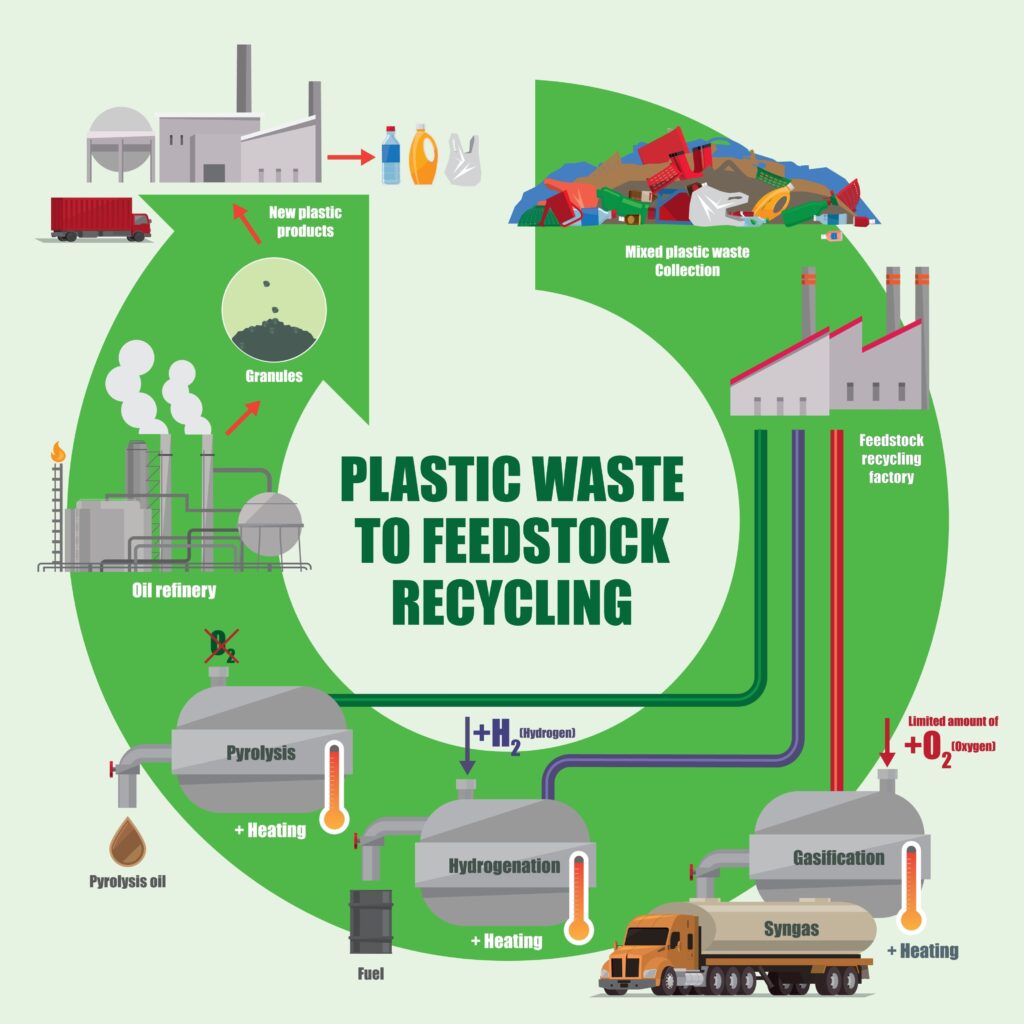
- Production Process: The plastic waste is fed into MOL’s steam cracker to produce monomers (the basic building blocks of plastic), which are then converted into polymers.
- Long-Term Strategy: This initiative is part of MOL’s “Shape Tomorrow” strategy, which aims to use up to 1.5 million tons of plastic waste materials by 2030. The feedstock supply will be secured through municipal waste management contracts in Hungary.
Expert Opinion
According to Péter Császár, MOL Senior Vice President, “This successful trial shows that MOL Group can now process circular feedstock using an ISCC Plus-certified process, turning plastic waste into new, high-value products. This is a significant step towards a sustainable petrochemical industry and strengthens our position as a leader in the circular economy in Central and Eastern Europe.”
Independent experts in the environmental sector also praised the move. Dr. Sarah Johnson, a materials scientist at Delft University of Technology in the Netherlands, commented, “Chemical recycling of plastic is a key technology for addressing plastic waste pollution. Compared to mechanical recycling, this method allows for the processing of mixed and low-quality plastics, creating new plastic products with properties equivalent to virgin plastics. However, scaling up production needs to be carefully considered in terms of the energy costs and environmental impact of the process.”
The Importance of the Technology
This technology not only helps reduce the amount of plastic waste that is landfilled and incinerated but also decreases the reliance on fossil fuels, contributing to environmental protection. MOL stated that it will continue to experiment with other recycled materials to develop more new processes, expanding the role of waste as a raw material for plastic production.
